<?xml version="1.0" encoding="UTF-8"?>
<rss version="2.0"
	xmlns:content="http://purl.org/rss/1.0/modules/content/"
	xmlns:wfw="http://wellformedweb.org/CommentAPI/"
	xmlns:dc="http://purl.org/dc/elements/1.1/"
	xmlns:atom="http://www.w3.org/2005/Atom"
	xmlns:sy="http://purl.org/rss/1.0/modules/syndication/"
	xmlns:slash="http://purl.org/rss/1.0/modules/slash/"
	>

<channel>
	<title>Family History Daily</title>
	<atom:link href="http://familyhistorydaily.com/feed/" rel="self" type="application/rss+xml" />
	<link>http://familyhistorydaily.com</link>
	<description>genealogy articles, blogs, research help and news</description>
	<lastBuildDate>Fri, 17 May 2013 21:35:05 +0000</lastBuildDate>
	<language>en-US</language>
	<sy:updatePeriod>hourly</sy:updatePeriod>
	<sy:updateFrequency>1</sy:updateFrequency>
	<generator>http://wordpress.org/?v=3.5.1</generator>
		<item>
		<title>One Girl&#8217;s Childhood During the Great Depression</title>
		<link>http://familyhistorydaily.com/family-history/one-girls-childhood-during-the-great-depression/</link>
		<comments>http://familyhistorydaily.com/family-history/one-girls-childhood-during-the-great-depression/#comments</comments>
		<pubDate>Fri, 17 May 2013 21:35:05 +0000</pubDate>
		<dc:creator>Susan Wallin Mosey</dc:creator>
				<category><![CDATA[Family History]]></category>
		<category><![CDATA[Personal Genealogy Stories]]></category>
		<category><![CDATA[Adra Erickson]]></category>
		<category><![CDATA[farm]]></category>
		<category><![CDATA[Great Depression]]></category>
		<category><![CDATA[Susan Mosey]]></category>

		<guid isPermaLink="false">http://familyhistorydaily.com/?p=1723</guid>
		<description><![CDATA[<p><p>By <a rel="author" href="http://familyhistorydaily.com/author/susan-wallin-mosey/">Susan Wallin Mosey</a></p><p>Here are memories of life on an Illinois farm, as recalled by my mother, Adra Erickson Wallin (1922-2010)&#8230; “I was born at home (all four of us were), at the farm at Barbers Corner on August 18, 1922, at six in the morning.  A nurse and a doctor came—Dr. Ludwig—but I was born before he got there!  My mother got a “hired girl” to help her take care of us for a few weeks. We lived on three farms when I was growing up.  My father grew corn, soybeans, oats, wheat, alfalfa, and hay for the animals.  We had six horses, two cows, pigs, chickens, turkeys, and sheep&#8230;  The Depression was hard on our family.  When I was twelve, in 1934, we lost our farm and had to move.  Everybody was poor then.  We had a phone when I was little, but not later—no electricity, no running water—and we were seven miles from town.  We had lamps and we would carry them to our rooms to study by. In the summer, we would have droughts—we’d get small crops those years.  We’d also get chinch bugs and grasshoppers on the corn (our biggest crop).  We’d sit in front of the fan to stay cool, or go down to the river, which was cold. We had an outhouse at every home I lived in.  We called it “the privy.”  They were terrible—just a board across with two holes.  There was also a board with a smaller hole for kids!  It was hot ...</p></p><p>This post <a href="http://familyhistorydaily.com/family-history/one-girls-childhood-during-the-great-depression/">One Girl&#8217;s Childhood During the Great Depression</a> is from <a href="http://familyhistorydaily.com">Family History Daily</a>.  </p>]]></description>
		<wfw:commentRss>http://familyhistorydaily.com/family-history/one-girls-childhood-during-the-great-depression/feed/</wfw:commentRss>
		<slash:comments>0</slash:comments>
		</item>
		<item>
		<title>Why Narrative Family History Is Best</title>
		<link>http://familyhistorydaily.com/family-history/why-narrative-family-history-is-best/</link>
		<comments>http://familyhistorydaily.com/family-history/why-narrative-family-history-is-best/#comments</comments>
		<pubDate>Sat, 11 May 2013 13:00:03 +0000</pubDate>
		<dc:creator>Biff and Nancy Barnes</dc:creator>
				<category><![CDATA[Expert Help]]></category>
		<category><![CDATA[Family History]]></category>
		<category><![CDATA[News and Current Events]]></category>
		<category><![CDATA[Tips and Tricks]]></category>
		<category><![CDATA[family history book]]></category>
		<category><![CDATA[family history writing]]></category>
		<category><![CDATA[Identity]]></category>
		<category><![CDATA[Marshall Duke]]></category>
		<category><![CDATA[N.Y. Times]]></category>
		<category><![CDATA[Narrative Family History]]></category>

		<guid isPermaLink="false">http://familyhistorydaily.com/?p=1711</guid>
		<description><![CDATA[<p><p>By <a rel="author" href="http://familyhistorydaily.com/author/biff-and-nancy-barnes/">Biff and Nancy Barnes</a></p><p>New York Times columnist Bruce Feiler asked himself, “What is the secret sauce that holds a family together? What are the ingredients that make some families effective, resilient, happy?” The answers he discovered appeared in a piece in the Sunday Times titled The Stories That Bind Us. It should be required reading for genealogists and family historians. Feiler consulted Emory University psychologist Marshall Duke who had explored myth and ritual in American families. What he learned was that, “The more children knew about their family’s history, the stronger their sense of control over their lives, the higher their self-esteem and the more successfully they believed their families functioned.” Family historians and genealogists must be onto something. The large majority of people I talk to about writing their family history say that their goal is to create something to pass on to the grandchildren. Writing a family history will, they hope, help those grandchildren have a greater sense of identity. What’s the best way to do that? As we have discovered recently in areas as diverse as business, the military and political campaigns, identity is often forged by telling a good story. So the key for family historians is discovering and relating their family’s story. Feiler offered some valuable insights about how to do that. He wrote: Psychologists have found that every family has a unifying narrative, he [Duke] explained, and those narratives take one of three shapes. First, the ascending family narrative: “Son, when we came to this country, we ...</p></p><p>This post <a href="http://familyhistorydaily.com/family-history/why-narrative-family-history-is-best/">Why Narrative Family History Is Best</a> is from <a href="http://familyhistorydaily.com">Family History Daily</a>.  </p>]]></description>
		<wfw:commentRss>http://familyhistorydaily.com/family-history/why-narrative-family-history-is-best/feed/</wfw:commentRss>
		<slash:comments>0</slash:comments>
		</item>
		<item>
		<title>Four Reasons Not to Write Down Your Life Story</title>
		<link>http://familyhistorydaily.com/family-history/four-reasons-not-to-write-down-your-life-story/</link>
		<comments>http://familyhistorydaily.com/family-history/four-reasons-not-to-write-down-your-life-story/#comments</comments>
		<pubDate>Wed, 01 May 2013 15:00:15 +0000</pubDate>
		<dc:creator>Susan Wallin Mosey</dc:creator>
				<category><![CDATA[Expert Help]]></category>
		<category><![CDATA[Family History]]></category>
		<category><![CDATA[Organizing Your Research]]></category>
		<category><![CDATA[Tips and Tricks]]></category>
		<category><![CDATA[life story]]></category>
		<category><![CDATA[memoirs]]></category>
		<category><![CDATA[reasons not to write your life story]]></category>
		<category><![CDATA[Susan Mosey]]></category>
		<category><![CDATA[writing your life story]]></category>

		<guid isPermaLink="false">http://familyhistorydaily.com/?p=1405</guid>
		<description><![CDATA[<p><p>By <a rel="author" href="http://familyhistorydaily.com/author/susan-wallin-mosey/">Susan Wallin Mosey</a></p><p>Most of my father’s life story is lost forever.  I always meant to write it down, and he always said he would do it—but when we finally made time to do it together, he died not long after we started.  I would give a king’s ransom to know more details about his life before we kids came along. I’ve heard lots of reasons for not writing down your life story… 1.  “I don’t know what to write about.” A good list of questions solves that problem.  Those kind of lists are all over the internet and in books at the bookstore.  I have one which I give to clients and family members.  If a person starts with a good list, then it’s as simple as this:  (a) write down your thoughts about each question that interests you; (b) skip the ones that don’t; (c) throw in anything else that you think of along the way; and (d) the job is done! 2.  “I’m not a very good writer/speller.” That’s like saying, “I’m not a very good mechanic, so I’m not going to drive a car.”  The fact is, we get help with the things we’re not good at.  One of my favorite things is editing.  That means taking someone else’s rough thoughts and “cleaning them up” and “making them pretty.”  Everyone knows someone (or can hire someone) who is good at that.   But if you don’t, write down your story anyway!  A rough diamond is much better than no diamond. ...</p></p><p>This post <a href="http://familyhistorydaily.com/family-history/four-reasons-not-to-write-down-your-life-story/">Four Reasons Not to Write Down Your Life Story</a> is from <a href="http://familyhistorydaily.com">Family History Daily</a>.  </p>]]></description>
		<wfw:commentRss>http://familyhistorydaily.com/family-history/four-reasons-not-to-write-down-your-life-story/feed/</wfw:commentRss>
		<slash:comments>4</slash:comments>
		</item>
		<item>
		<title>LitvakSIG is Participating in the 33rd Annual IAJGS Conference</title>
		<link>http://familyhistorydaily.com/genealogy-resources/litvaksig-the-annual-iajgs-conference/</link>
		<comments>http://familyhistorydaily.com/genealogy-resources/litvaksig-the-annual-iajgs-conference/#comments</comments>
		<pubDate>Wed, 24 Apr 2013 15:54:55 +0000</pubDate>
		<dc:creator>Family History Daily</dc:creator>
				<category><![CDATA[Genealogy Resources]]></category>
		<category><![CDATA[News and Current Events]]></category>
		<category><![CDATA[International Association of Jewish Genealogical Societies]]></category>
		<category><![CDATA[LitvakSIG]]></category>

		<guid isPermaLink="false">http://familyhistorydaily.com/?p=1696</guid>
		<description><![CDATA[<p><p>By <a rel="author" href="http://familyhistorydaily.com/author/Admin/">Family History Daily</a></p><p>Thank you to Eden Joachim, President of LitvakSIG, for this announcement.  LitvakSIG is the Special Interest Group (SIG) devoted to Lithuanian (Litvak) – Jewish genealogy, heritage and family history. Our website is www.litvaksig.org.  Our All Lithuania Database (ALD) containing 1.2 million records is freely searchable, as is our Shtetl Database. Our website has hundreds of pages of information to help you in your family history quest. LitvakSIG is participating in the 33rd annual International Association of Jewish Genealogical Societies (IAJGS) Conference taking place this year in Boston, Massachusetts from Sunday August 4 through Friday August 9. We will have a big presence again this year, as we have had for more than 10 years at these annual international conferences. Below is a listing of programs of interest to Litvak researchers during the IAJGS Conference. This list includes the programs sponsored by LitvakSIG and programs specifically Litvak in nature. The entire list of programs may be viewed at the conference website, www.iajgs2013.org, along with abstracts of each program. Please note this is only a preliminary schedule and is subject to change. LitvakSIG Day is Tuesday, August 6. Our programming block is in the afternoon, beginning with our luncheon followed by two presentations and our annual SIG General Meeting. Additional SIG sponsored programs occur on Tuesday morning, Wednesday and Thursday. Our Guest Speakers are Ruta Anulyte, Aleksandr Avramenko, and Sergey Kanovich of the MACEVA – Lithuanian Cemetery Project. Other Litvak related programs occur on Monday, Wednesday and Thursday. Opening day, Sunday, August 4, from 1:30 PM &#8211; ...</p></p><p>This post <a href="http://familyhistorydaily.com/genealogy-resources/litvaksig-the-annual-iajgs-conference/">LitvakSIG is Participating in the 33rd Annual IAJGS Conference</a> is from <a href="http://familyhistorydaily.com">Family History Daily</a>.  </p>]]></description>
		<wfw:commentRss>http://familyhistorydaily.com/genealogy-resources/litvaksig-the-annual-iajgs-conference/feed/</wfw:commentRss>
		<slash:comments>0</slash:comments>
		</item>
		<item>
		<title>The Fourteen Garvers of Clare County, Michigan</title>
		<link>http://familyhistorydaily.com/family-history/the-fourteen-garvers-of-clare-county-michigan/</link>
		<comments>http://familyhistorydaily.com/family-history/the-fourteen-garvers-of-clare-county-michigan/#comments</comments>
		<pubDate>Tue, 23 Apr 2013 13:00:49 +0000</pubDate>
		<dc:creator>Susan Wallin Mosey</dc:creator>
				<category><![CDATA[Family History]]></category>
		<category><![CDATA[Personal Genealogy Stories]]></category>
		<category><![CDATA[Clare County]]></category>
		<category><![CDATA[family reunion]]></category>
		<category><![CDATA[Garver]]></category>
		<category><![CDATA[Hazel Alwood]]></category>
		<category><![CDATA[siblings]]></category>
		<category><![CDATA[Susan Mosey]]></category>
		<category><![CDATA[Walter Garver]]></category>

		<guid isPermaLink="false">http://familyhistorydaily.com/?p=1135</guid>
		<description><![CDATA[<p><p>By <a rel="author" href="http://familyhistorydaily.com/author/susan-wallin-mosey/">Susan Wallin Mosey</a></p><p>I grew up with one brother and one sister—a typical 50s family.  My mother-in-law, however, grew up in a different world—she shared her childhood with five sisters and eight brothers. Walter Garver and Hazel Alwood were married in Clare County, Michigan in 1914.  Over the next 25 years, they had fifteen children—in order, they were Doris, Charles, Wayne, Forest, Lester, Fern, Donna, Walter, Virginia, Max, Robert, Rex, Betty, Marlyn, and William.  All survived to adulthood except the last, William, who died from congenital heart disease at only five days old. The family grew up in a small farmhouse on Adams Road in Clare County without much money, but with a determination to make the best of what they had.  Hazel managed to keep her ever-increasing brood fed; my mother-in-law Donna says, “We always had enough to eat—but it was a lot of beans and potatoes.” She once told me that her mother’s attitude about the new babies was, “One more won’t make that much difference!”  (One of Hazel’s sisters, Floy Dell Garver Haring, had a brood of sixteen.)  Donna says that “Mom had one baby mid-bread-making—Fern stepped in and finished the bread.”  Walter was a farmer, raising hogs and milking cows on 40 acres, and in the 1930s, he did WPA work helping to build Route M61—by hand, with shovels. The sisters were close, sharing everything.  In another story I told of Donna and Virginia writing to a sailor boy in WWII, who ended up as Donna’s future husband.  Two ...</p></p><p>This post <a href="http://familyhistorydaily.com/family-history/the-fourteen-garvers-of-clare-county-michigan/">The Fourteen Garvers of Clare County, Michigan</a> is from <a href="http://familyhistorydaily.com">Family History Daily</a>.  </p>]]></description>
		<wfw:commentRss>http://familyhistorydaily.com/family-history/the-fourteen-garvers-of-clare-county-michigan/feed/</wfw:commentRss>
		<slash:comments>0</slash:comments>
		</item>
		<item>
		<title>What Happened to Ethel May Fazenbaker Murphy?</title>
		<link>http://familyhistorydaily.com/family-history/what-happened-to-ethel-may-fazenbaker-murphy/</link>
		<comments>http://familyhistorydaily.com/family-history/what-happened-to-ethel-may-fazenbaker-murphy/#comments</comments>
		<pubDate>Wed, 17 Apr 2013 13:00:47 +0000</pubDate>
		<dc:creator>Family History Daily</dc:creator>
				<category><![CDATA[Family History]]></category>
		<category><![CDATA[Personal Genealogy Stories]]></category>
		<category><![CDATA[Fazenbaker]]></category>
		<category><![CDATA[Murphy]]></category>

		<guid isPermaLink="false">http://familyhistorydaily.com/?p=1664</guid>
		<description><![CDATA[<p><p>By <a rel="author" href="http://familyhistorydaily.com/author/Admin/">Family History Daily</a></p><p>Thank you to Shelly Johnson for sharing this story with us. Whatever happened to Ethel May Fazenbaker Murphy? Growing up I had always heard about Ethel Murphy, mother to my great grandmother Frances May Catherine Murphy Fazenbaker Knepp. When I started doing genealogy about twenty five years ago I asked my mother Virginia Catherine Miller Johnson about her family. She told me that her grandmother’s mother disappeared and that family “lore” had it that (and I am always skeptical about family lore) that she was killed in some sort of accident around November of 1908 or 1909. I thought, OK, I can start looking to see what I could possibly find. Of course, this was all before the internet. When societies and governments started placing their documents online, such as vital records and newspapers, naturally I started looking for Ethel. Ethel was born in February 1889 to Ralph Hilary and Frances Soredo Metz Fazenbaker. She married William Thomas Murphy on December 23, 1907 in Piedmont, Mineral County, WV. She had her daughter Fannie Catherine on May 8, 1908 at Gilmore, Allegany County, MD. William Thomas Murphy remarried Lavina Josephine Deremer on 17 October 1910 in Mineral Co., WV. They had a child named Eva Rose Murphy born March 27, 1913. Sometime between May 8, 1908 and October 17, 1910 when William Thomas Murphy married Josephine Deremer, Ethel disappears. According to family lore, Ethel died in some sort of “accident.” I have searched newspapers, death records, cemetery records and wills and ...</p></p><p>This post <a href="http://familyhistorydaily.com/family-history/what-happened-to-ethel-may-fazenbaker-murphy/">What Happened to Ethel May Fazenbaker Murphy?</a> is from <a href="http://familyhistorydaily.com">Family History Daily</a>.  </p>]]></description>
		<wfw:commentRss>http://familyhistorydaily.com/family-history/what-happened-to-ethel-may-fazenbaker-murphy/feed/</wfw:commentRss>
		<slash:comments>2</slash:comments>
		</item>
		<item>
		<title>Family History Centers: Billions of Genealogical Records Are Closer Than You Think</title>
		<link>http://familyhistorydaily.com/family-history/family-history-center-do-you-have-one-in-your-area/</link>
		<comments>http://familyhistorydaily.com/family-history/family-history-center-do-you-have-one-in-your-area/#comments</comments>
		<pubDate>Tue, 16 Apr 2013 01:34:31 +0000</pubDate>
		<dc:creator>Family History Daily</dc:creator>
				<category><![CDATA[Expert Help]]></category>
		<category><![CDATA[Family History]]></category>
		<category><![CDATA[Genealogy Resources]]></category>
		<category><![CDATA[Tips and Tricks]]></category>
		<category><![CDATA[family history center]]></category>
		<category><![CDATA[familysearch]]></category>
		<category><![CDATA[featured topic]]></category>

		<guid isPermaLink="false">http://familyhistorydaily.com/?p=1643</guid>
		<description><![CDATA[<p><p>By <a rel="author" href="http://familyhistorydaily.com/author/Admin/">Family History Daily</a></p><p>Many of us have dreamed of making our way to the amazing Family History Library in Salt Lake City, Utah. With genealogical records on more than 3 billion individuals this family history center hosts the largest collection of its kind found anywhere in the world. But what many of us don&#8217;t realize is that the family history records from this collection are also available on loan through a network of more than 4,500 FamilySearch Family History Centers around the world. At a FamilySearch center you can search billions of online records. These centers also offer access to the LDS circulating collection of 2.5 million microfilms from over 100 countries. Volunteer staff at a FamilySearch center will help you understand and use their available resources. If you are a beginner, they can help you get started with your own family history. In some locations, expert research advisers are available. What this means is that not only can you access the wealth of information available at each individual location&#8211;including computers to browse FamilySearch&#8217;s online collections, full access to available microfilms and helpful volunteer experts&#8211;but you can also order specific microfilms from the Family History Library in Salt Lake City and have them shipped to your local center. FamilySearch’s Microfilm Ordering service is your gateway to a vast collection of genealogical and historical records. The service allows you to reserve and loan films to family history centers and affiliate libraries. The loan is free, but there is a small shipping and handling charge for each film. So ...</p></p><p>This post <a href="http://familyhistorydaily.com/family-history/family-history-center-do-you-have-one-in-your-area/">Family History Centers: Billions of Genealogical Records Are Closer Than You Think</a> is from <a href="http://familyhistorydaily.com">Family History Daily</a>.  </p>]]></description>
		<wfw:commentRss>http://familyhistorydaily.com/family-history/family-history-center-do-you-have-one-in-your-area/feed/</wfw:commentRss>
		<slash:comments>2</slash:comments>
		</item>
		<item>
		<title>The Two Wives of Thomas Garver</title>
		<link>http://familyhistorydaily.com/family-history/the-two-wives-of-thomas-garver/</link>
		<comments>http://familyhistorydaily.com/family-history/the-two-wives-of-thomas-garver/#comments</comments>
		<pubDate>Sat, 13 Apr 2013 22:41:41 +0000</pubDate>
		<dc:creator>Susan Wallin Mosey</dc:creator>
				<category><![CDATA[Family History]]></category>
		<category><![CDATA[Personal Genealogy Stories]]></category>
		<category><![CDATA[Ellen Heilman]]></category>
		<category><![CDATA[Mary Ann Heilman]]></category>
		<category><![CDATA[sisters]]></category>
		<category><![CDATA[Susan Mosey]]></category>
		<category><![CDATA[Thomas Garver]]></category>

		<guid isPermaLink="false">http://familyhistorydaily.com/?p=1175</guid>
		<description><![CDATA[<p><p>By <a rel="author" href="http://familyhistorydaily.com/author/susan-wallin-mosey/">Susan Wallin Mosey</a></p><p>My husband’s great-grandfather Charles Garver had a brother, Thomas, who married two sisters—Mary Ann and Ellen Heilman. Thomas Garver (1850-1902) was farmer in Defiance County, Ohio.  According to notes taken by his great-granddaughter Ruth Marie Burkhart in 1943 for a school project, he had a sideline as well.  She wrote, “He was a preacher of the United Brethren Church located at Ridgeville, a small town a few miles from Napoleon [Ohio].  He lived on a small farm near the church.  He farmed and did odd jobs through the week and then on Sunday he gave his sermon.” In 1873 Thomas married Mary Ann Heilman, a local German girl, and soon they had three sons named John, Ulysses, and William.  None of the three boys survived long, however, Ulysses dying shortly after birth in 1876 and the other two boys in 1878; a typhoid epidemic that year may have been the cause.  But soon afterwards daughter Amelia was born, followed by Ellen in 1882. By 1884 their life together was drawing to a close.  Mary Ann passed away at the age of 31, leaving two little girls without a mother.  Son Floyd later remarked to one genealogist in the family that Thomas had a hand in his first wife’s death—but there is no evidence to support that claim, and family members say that Floyd was known for his tall tales.  Mary Ann’s obituary says &#8220;consumption&#8221; [tuberculosis]—that we know for sure. The grieving widower soon found comfort, however, in the arms of ...</p></p><p>This post <a href="http://familyhistorydaily.com/family-history/the-two-wives-of-thomas-garver/">The Two Wives of Thomas Garver</a> is from <a href="http://familyhistorydaily.com">Family History Daily</a>.  </p>]]></description>
		<wfw:commentRss>http://familyhistorydaily.com/family-history/the-two-wives-of-thomas-garver/feed/</wfw:commentRss>
		<slash:comments>0</slash:comments>
		</item>
		<item>
		<title>What I&#8217;ve Learned from &#8220;Working the Cemeteries&#8221;</title>
		<link>http://familyhistorydaily.com/tips-and-tricks/what-ive-learned-from-working-the-cemeteries/</link>
		<comments>http://familyhistorydaily.com/tips-and-tricks/what-ive-learned-from-working-the-cemeteries/#comments</comments>
		<pubDate>Tue, 09 Apr 2013 00:48:48 +0000</pubDate>
		<dc:creator>Jodi Bash</dc:creator>
				<category><![CDATA[Tips and Tricks]]></category>
		<category><![CDATA[Billion Graves]]></category>
		<category><![CDATA[Cemeteries]]></category>
		<category><![CDATA[Find a Grave]]></category>
		<category><![CDATA[graveyard tips]]></category>
		<category><![CDATA[Photography tips]]></category>

		<guid isPermaLink="false">http://familyhistorydaily.com/?p=1620</guid>
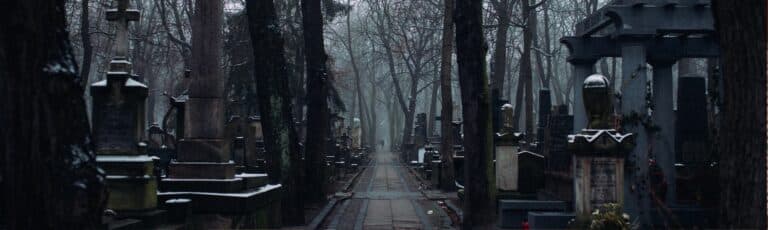
		<description><![CDATA[<p><p>By <a rel="author" href="http://familyhistorydaily.com/author/jodi-bash/">Jodi Bash</a></p><p>I’ve loved cemeteries as long as I can remember. I think I became a genealogist just so I would have a good explanation for how often I visited them.  While I go mainly to take photos for Find A Grave or Billion Graves, I find other reasons as well; the calm, the time to think, the sense of history, etc. Over the years I’ve learned some great lessons while “working the graveyards” as my friend loves me to say. These tips and insights will definitely help new graveyard addicts and might even be useful for those of us who&#8217;ve &#8220;gone off the deep end&#8221; so to speak 1) Watch out for ant beds! Seriously, how many times do I have to learn this lesson?? With a camera up to your face, moving from stone to stone quickly, it’s easy to forget to LOOK before you STEP. 2) Get out of the shot! The first time I took a photo of a lovely and huge headstone for someone I realized that the glossy front of the stone had a perfect reflection of me and my camera captured over the names and dates of their loved ones. Not so cool. So I had to find an angle where I could get a good shot of the stone and not have me plastered in it. It can be a challenge but so worth the effort. Ditto for shadows by the way. 3) Use the sun. Taking shots at a slight angle can often make an ...</p></p><p>This post <a href="http://familyhistorydaily.com/tips-and-tricks/what-ive-learned-from-working-the-cemeteries/">What I&#8217;ve Learned from &#8220;Working the Cemeteries&#8221;</a> is from <a href="http://familyhistorydaily.com">Family History Daily</a>.  </p>]]></description>
		<wfw:commentRss>http://familyhistorydaily.com/tips-and-tricks/what-ive-learned-from-working-the-cemeteries/feed/</wfw:commentRss>
		<slash:comments>11</slash:comments>
		</item>
		<item>
		<title>Double Wedding Ring: The Story of Rhoda Wyatt</title>
		<link>http://familyhistorydaily.com/family-history/double-wedding-ring-the-story-of-rhoda-wyatt/</link>
		<comments>http://familyhistorydaily.com/family-history/double-wedding-ring-the-story-of-rhoda-wyatt/#comments</comments>
		<pubDate>Sun, 07 Apr 2013 12:00:59 +0000</pubDate>
		<dc:creator>Susan Wallin Mosey</dc:creator>
				<category><![CDATA[Family History]]></category>
		<category><![CDATA[Personal Genealogy Stories]]></category>
		<category><![CDATA[Double Wedding Ring]]></category>
		<category><![CDATA[George Salter]]></category>
		<category><![CDATA[Patricia Wendorf]]></category>
		<category><![CDATA[Philip Wyatt]]></category>
		<category><![CDATA[Rhoda Wyatt]]></category>
		<category><![CDATA[Susan Mosey]]></category>
		<category><![CDATA[William Wyatt]]></category>

		<guid isPermaLink="false">http://familyhistorydaily.com/?p=1050</guid>
		<description><![CDATA[<p><p>By <a rel="author" href="http://familyhistorydaily.com/author/susan-wallin-mosey/">Susan Wallin Mosey</a></p><p>Last year I spent some time researching the family history of my sister-in-law Susie.  Along we way we discovered some memorable stories, including that of Rhoda Wyatt (1830-1910). Susie’s great-great-great-grandfather was William Wyatt (1799-1867), a landowner in Somerset, England in the 1800s.  He had seven children with his first wife, most of whom ended up in America.  One child was Susie’s great-great-grandfather Philip Wyatt (1821-1892), a real character who married three women named Elizabeth—the first for love, the second on the rebound, and the third for her money. Besides those seven, William raised another child named Rhoda Wyatt—an orphan who was adopted by her aunt and uncle and raised as a member of the family. Rhoda had a happy childhood.  But when her adoptive mother died, Philip brought a new wife into the house, who soon ruled the roost her own way.  Then one of Rhoda’s sisters married the man Rhoda was in love with—the local butcher, George Salter—and they moved to America.  Rhoda must have thought her life was over. She was soon given an unexpected second chance.  Her sister died shortly after having (and losing) George’s second son.  The grieving widower wrote a letter to Rhoda’s father, asking if one of his other daughters would like to come to America and take her dead sister’s place—marrying George and raising their surviving son!  Rhoda quickly accepted, and before long, she was a new bride in America. But sixteen years and three more children later, she found herself widowed in ...</p></p><p>This post <a href="http://familyhistorydaily.com/family-history/double-wedding-ring-the-story-of-rhoda-wyatt/">Double Wedding Ring: The Story of Rhoda Wyatt</a> is from <a href="http://familyhistorydaily.com">Family History Daily</a>.  </p>]]></description>
		<wfw:commentRss>http://familyhistorydaily.com/family-history/double-wedding-ring-the-story-of-rhoda-wyatt/feed/</wfw:commentRss>
		<slash:comments>0</slash:comments>
		</item>
	</channel>
</rss>